Running a business requires a level of certainty that goes beyond what a typical homeowner needs. In the commercial sector, power interruptions mean stopped production lines, lost data, and significant financial revenue loss. While diesel generators have long been the standard for backup, the rising cost of fuel and maintenance is driving industries toward solar-plus-storage solutions. However, commercial operators cannot afford the downtime associated with replacing fragile battery banks every few years.
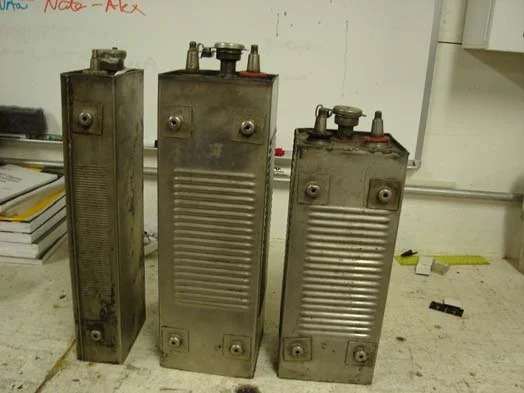
This is why industrial sectors like telecommunications and railway utilities have relied on the Nickel-Iron Battery for over a century. They understand that the “install and forget” nature of this technology is the only way to guarantee uptime in remote or critical infrastructure. For modern businesses looking to secure their energy future, adopting this proven industrial technology is a strategic move that solidifies operational resilience.
Industrial Reliability of the Nickel-Iron Battery
The design philosophy behind industrial equipment is fundamentally different from consumer goods; it prioritizes longevity over lightness. A forklift or a cell tower backup system does not need to be lightweight; it needs to work every single time it is called upon. The heavy, robust construction of alkaline batteries is perfectly suited for these stationary applications where weight is irrelevant, but failure is unacceptable.
Telecom Applications for the Edison Battery
Telecommunication towers are often located on mountain peaks or in remote valleys where grid power is unreliable or non-existent. Servicing these sites is incredibly expensive, requiring helicopter drops or long off-road journeys. The Edison Battery is the industry standard here because it does not require frequent technician visits, slashing the operational expenditure (OPEX) for telecom providers and ensuring your cell service stays active during storms.
Railroad Signaling and the Edison Battery
One of the earliest and most enduring uses of this chemistry is in railway signaling and track switching systems. These critical safety systems operate in the harshest outdoor environments, subjected to vibration, heat, and freezing cold. The fact that major railways still trust alkaline technology to prevent train collisions speaks volumes about its unparalleled reliability and safety profile in mission-critical scenarios.
Scalability of the Nickel-Iron Battery
Commercial energy needs are rarely static; they grow as the business expands and adds new equipment or facilities. A major limitation of lithium and lead-acid systems is the difficulty in scaling up an existing bank without replacing the old units. Alkaline chemistry offers a modular scalability that allows facility managers to add capacity incrementally, aligning capital expenditure with actual business growth.
Parallel Strings of the Nickel-Iron Battery
You can easily parallel multiple strings of these batteries to create massive energy reservoirs capable of powering factories or large office complexes. Because the internal resistance is robust, the batteries share the load effectively without the complex balancing issues found in lithium arrays. This makes it feasible to start with a modest backup system and grow it into a full grid-defection solution over time.
High Capacity Options for the Nickel-Iron Battery
For heavy industrial loads, we offer large-format cells with massive amp-hour capacities that dwarf standard residential batteries. These large cells reduce the complexity of the system by minimizing the number of interconnects required to achieve high storage totals. A simpler system with fewer connections is inherently more reliable, reducing the points of failure in your commercial microgrid.
Commercial Benefits of the Edison Battery
Key reasons why businesses choose this technology for their infrastructure.
- OPEX: Drastically reduces ongoing maintenance and replacement costs.
- Reliability: Proven track record in critical infrastructure like rail and telecom.
- Safety: Non-flammable chemistry lowers insurance premiums for warehouses.
- Scalability: Grow the system easily without scrapping initial investments.
- Temperature: No need for expensive HVAC systems to cool the battery room.
- Life: 30+ year lifespan matches the depreciation cycle of buildings.
- Durability: Withstands the rough environment of industrial zones.
- Sustainability: Enhances the company’s green credentials with recyclable tech.
- ROI: Delivers the best return on investment over a 20-year horizon.
Conclusion on the Commercial Edison Battery
For a business owner, every capital investment must be justified by its return and its reliability. Purchasing a battery system that becomes a recurring liability every five years is bad business sense. You need an asset that performs consistently, requires minimal oversight, and protects your operations from the volatility of the energy market.
The Nickel-Iron Battery is the industrial-grade solution that serious enterprises rely on to keep the lights on and the machines running. It transitions your energy storage from a consumable expense into a permanent infrastructural asset. By choosing the same technology that powers the world’s most critical networks, you ensure your business is built on a foundation of unshakeable power.